Why I Changed My Mind About Antarctic Expeditions
After almost 40 years in the travel industry, I thought I understood how to choose the right Antarctic expedition. One evening with HX Expeditions challenged my assumptions about ship size, landings and what it really means to experience Antarctica.
I have attended more travel presentations than I can recall. Some were memorable. Others blur into one another.
So when Hayley and I attended an HX Expeditions evening recently, I had no particular expectations. I had attended a similar presentation last year, and I assumed I already understood the basic story.
Antarctica would look extraordinary.
There would be icebergs, whales and penguins.
We would hear about expedition ships, sustainability and polar exploration.
I was interested, of course, but I certainly didn’t expect to come away questioning one of my long-held assumptions about travelling to Antarctica.
I did.
For years, I had assumed that the smallest possible expedition ship was the better choice.
With only around 100 guests permitted ashore at any landing site at one time, the logic seemed simple. A ship carrying around 200 guests had to be the ideal choice.
Smaller ship. Less waiting time between landings. More time on the ice.
Except, I discovered, I had been measuring the entire Antarctic experience by only one small part of it.
It isn’t about getting more time on the ice
Like many people, I assumed the highlight of Antarctica is stepping ashore. After all, that is what everyone talks about: standing on the seventh continent, seeing penguins up close and walking across the snow. Those moments are, of course, unforgettable.
But as I listen to the presentation, I start thinking about the rest of the day. What happens while another group is ashore? On a smaller expedition ship, that may simply mean waiting for your turn.
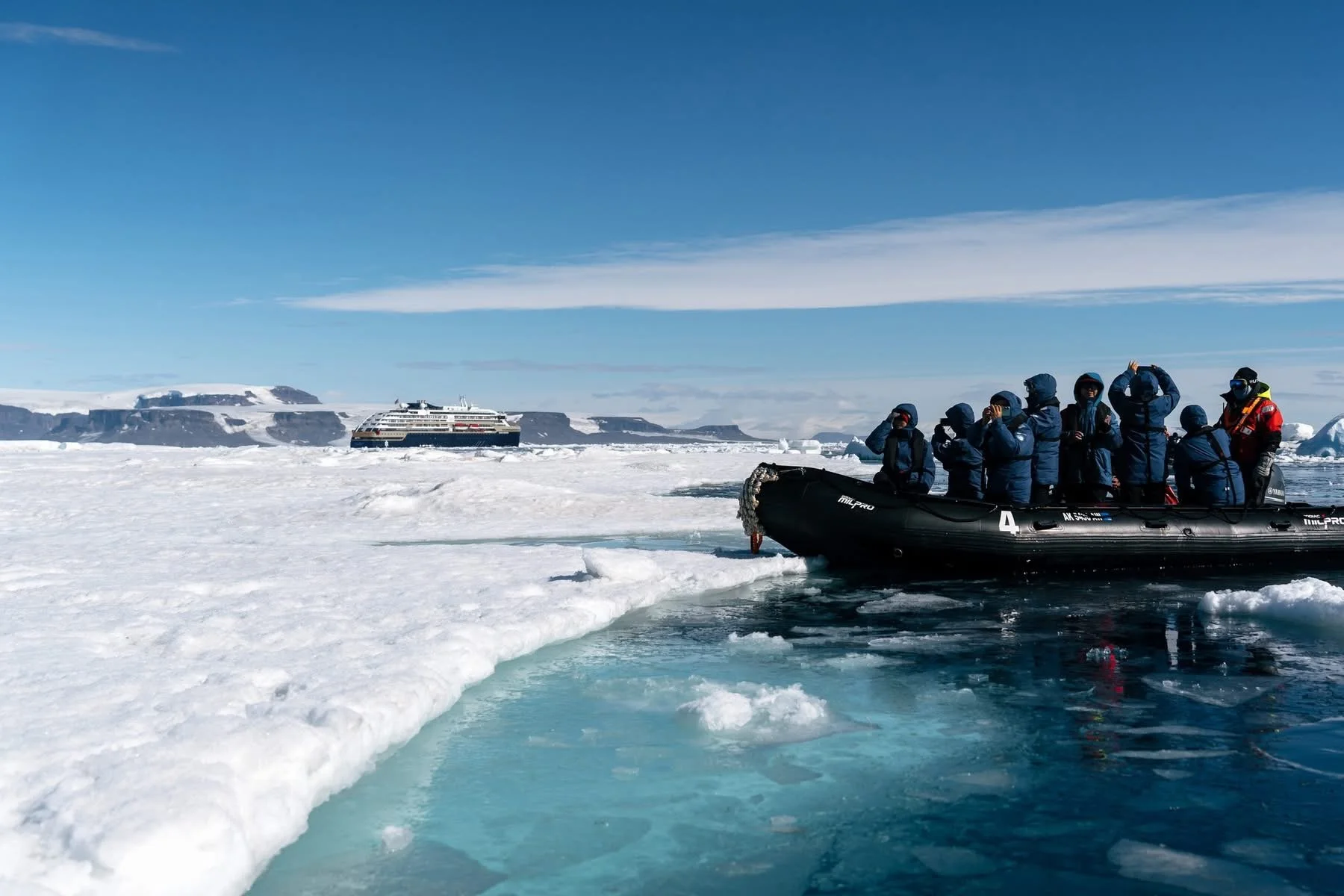
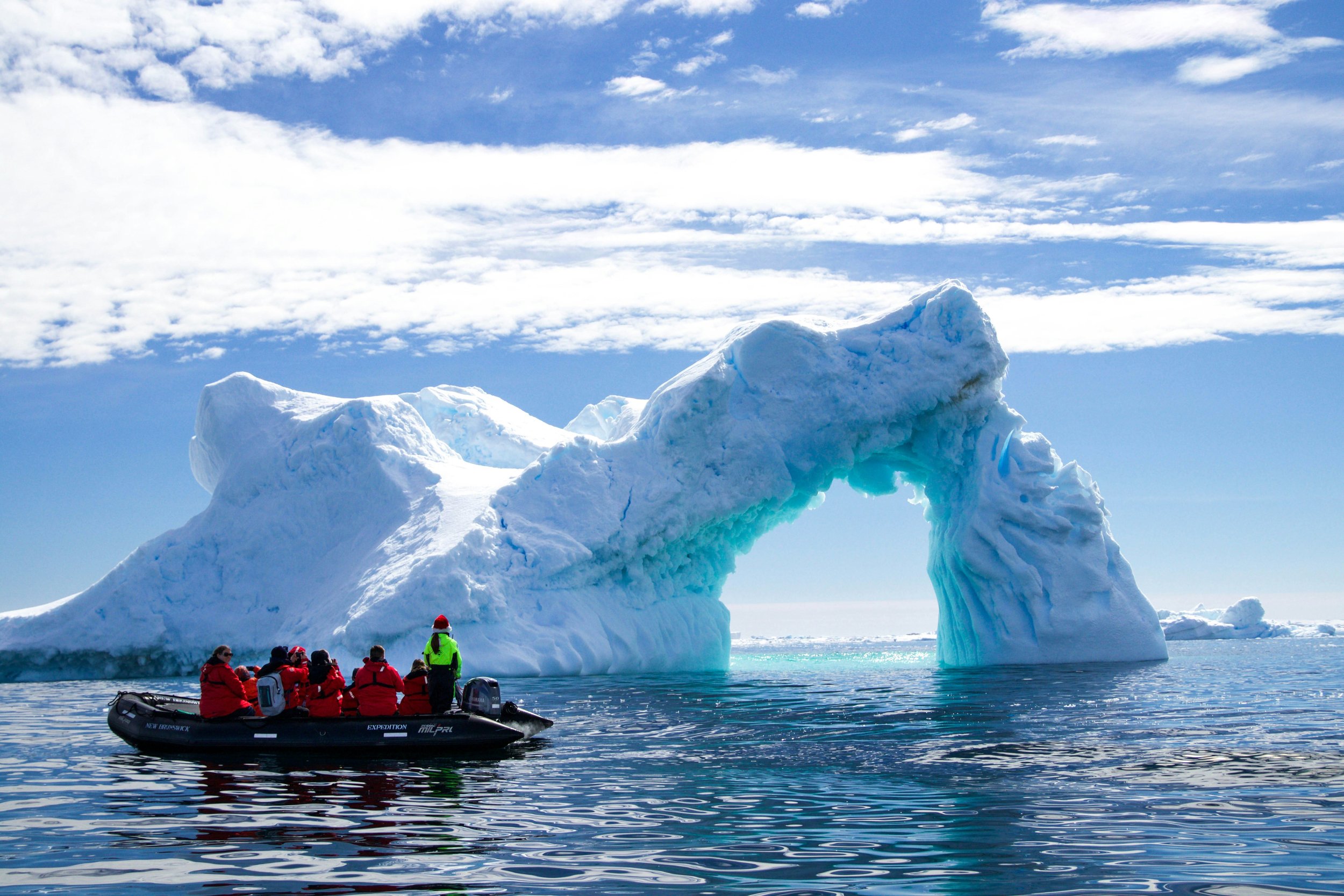
What if, instead of waiting, you have choices? You could be cruising quietly through a maze of icebergs in a Zodiac, paddling a kayak through calm polar waters, joining scientists in the onboard Science Centre, listening to an expedition expert explain the wildlife you have just encountered, or simply standing on deck watching whales surface beside the ship.
That was my lightbulb moment. I realised Antarctica is not measured by the minutes your boots are on the ice. It is measured by how deeply you immerse yourself in one of the most extraordinary environments on Earth.
That one realisation changes the way I think about Antarctica altogether. Instead of asking, "How much time will I spend ashore?", I start asking, "What sort of Antarctic experience do I want?"
It's a subtle shift, but an important one.
Antarctica isn’t really a cruise
Antarctica appeals to travellers who love exploring. They may have already experienced an African safari, hiked to Machu Picchu, explored Asia, travelled through South America or discovered the wild landscapes of Alaska and the Kimberleys. Antarctica feels like the next great adventure, a privilege and perhaps even the pinnacle of a lifetime spent discovering the world.
For many travellers, it represents the final continent, the ultimate wildlife experience or the fulfilment of a lifelong dream.
The ship simply becomes the way you reach it or, as HX Expeditions describes it, your Base Camp.
I love that expression because it perfectly captures what an expedition ship should be. You head out each day to explore, then return to warm up, share stories, hear from the expedition team, learn from scientists and prepare for the next adventure. The ship is not merely somewhere to sleep. It becomes an important part of the expedition itself.
What Size Ship Is Best for Antarctica?
One of the things that has always confused me about Antarctica is ship size. Some ships carry more than 500 passengers and are unable to make Antarctic landings, instead offering scenic cruising through these spectacular waters. At the other end of the spectrum are very small expedition ships, which many people consider the ideal choice.
For years, I assumed smaller automatically meant better. This presentation challenged that assumption.
HX’s purpose-built expedition ships, MS Roald Amundsen and MS Fridtjof Nansen, can carry up to 490 guests. They are still small ships, but they have the space, facilities and expedition teams to support a much broader range of experiences throughout the day.
It reminds me of the Goldilocks story: not too big, not too small, but just right.
It isn't simply about carrying fewer passengers. It's about having the right balance between expedition experiences, onboard facilities, comfort and access to Antarctica itself.
Rather than simply waiting for the next landing, there may be other ways to remain immersed in Antarctica, depending on the day’s conditions and expedition program.You might be kayaking, photographing wildlife from a Zodiac, joining the scientists in the Science Centre, attending an expedition recap, enjoying the Wellness Centre or simply taking in the surrounding landscape from the ship.
Adventurous travellers may even have the opportunity to camp overnight on the Antarctic ice on selected expeditions. That’s not for me, but I love that the option is there for those who dream of sleeping beneath the Antarctic sky.
Everyone imagines Antarctica a little differently, and I think that's exactly the point.
What Does Antarctica Sound Like?
One thing that surprises me most is the sound of Antarctica. I have always imagined it as a place of complete silence, but it is not silent at all.
There are the cracks and groans of ancient ice, the chatter of penguins, the calls of seabirds overhead, the splash of whales breaking the surface near your kayak and the movement of water around sculpted icebergs. It is not the sound of traffic, engines or everyday life. It is the sound of nature.
It's difficult to describe until you imagine yourself there, surrounded by ice instead of traffic, and wildlife instead of city noise.
That's another aspect I appreciate about HX's purpose-built hybrid ships. Their quieter operation allows the destination to take centre stage, so the sound you notice is not simply the hum of the ship, but the essence of Antarctica itself.
Why HX changed my thinking
Many Australian travellers may remember HX as Hurtigruten Expeditions, before the expedition side of the business adopted its new name.
The more I listened, the more I realised there was a reason behind every decision. Nothing felt accidental. That’s what impressed me most: not any one particular feature, but the sense that everything had a purpose. Every aspect of the expedition seems thoughtfully designed to help guests connect more deeply with Antarctica, and that confidence comes from more than 130 years of polar exploration.
Their expedition heritage dates back to 1896, when they began pioneering voyages to Svalbard. The Norwegian spirit of exploration remains at the heart of what they do today, and that experience matters when you're travelling to one of the most remote, unpredictable and extraordinary places on Earth.
One of their ships, MS Roald Amundsen, is named after the Norwegian explorer who led the first expedition to reach the South Pole in 1911. It feels like a fitting tribute, because the same spirit of exploration, discovery and respect for the polar environment continues to shape the way HX designs its expeditions today.
It feels less like clever branding and more like a continuation of a long tradition of exploration.
Choosing the right Antarctic expedition
Choosing the right Antarctic expedition depends on what matters most to you.
Some travellers are happy to admire the continent from the comfort of a larger cruise ship. Others want the intimacy of a much smaller expedition vessel. Many are looking for something in between.
That’s why comparing Antarctic cruises isn’t simply about comparing prices or ship sizes. It’s about understanding the experience each expedition offers.
Do you dream of kayaking among icebergs? Would you love to spend time with onboard scientists? Is photography your passion? Or is simply standing on the Antarctic continent the experience you’ve always imagined?
As travel advisors, that’s where we come in. Rather than simply recommending a ship, we help match the right expedition to the right traveller.
Because Antarctica isn’t just another cruise destination. For most people, it’s a once-in-a-lifetime journey.
Antarctica is back on my bucket list
Perhaps that is the biggest thing I took away from the evening.
For a long time, Antarctica had quietly slipped off my own bucket list. It wasn't because I no longer wanted to go. It simply felt expensive, complicated and perhaps a little beyond reach.
After one evening, it suddenly feels achievable again. Perhaps that's because I stopped thinking about Antarctica as something complicated and start thinking about it as an experience that has been carefully designed to be enjoyed, learned from and remembered.
More importantly, I come away feeling that I now better understand the different Antarctic choices and the type of expedition that would suit me.
One thing I've learnt after almost 40 years in travel is that the best travel advisors never stop learning. If changing my own perspective helps my clients make a better decision, then that's time well spent
HX won't be the right choice for everyone. Some travellers may prefer to admire Antarctica from a larger ship without going ashore, while others may want the intimacy of a much smaller expedition vessel.
But if someone asked me today where I would begin the conversation about planning an Antarctic expedition, I'd start with HX.
If I only visit Antarctica once, I want it to be an all-encompassing adventure that allows me to explore, learn and become fully immersed in one of the most extraordinary places on our planet.
And right now, I'm hoping that journey will be with HX Expeditions.
Questions to Ask Before Booking an Antarctic Expedition
One thing this evening also reminds me is that the questions people ask about Antarctica aren't always the most useful ones.
Instead of asking:
What's the smallest ship?
How many landings will I get?
Which company is cheapest?
Perhaps the better questions are:
What sort of Antarctic experience am I looking for?
Do I want to kayak, hike or simply enjoy the wildlife?
How important are onboard experts and scientists?
Which expedition style suits me best?
Once you start asking those questions, choosing the right expedition becomes much easier.
Final Thoughts
Sometimes it takes just one conversation to change the way you see a destination.
That's exactly what happened to me. I walked into the presentation believing Antarctica was all about maximising time ashore. I walked out realising the expedition itself is every bit as important as the destination.
Antarctica has found its way back onto my bucket list, and when the time comes, I already have a much clearer idea of how I want to experience it.
Perhaps that's the biggest compliment I can give the evening.
If Antarctica has been sitting quietly on your own bucket list, perhaps now is the time to start exploring what's possible.
Whether you are considering HX Expeditions or comparing several Antarctic expedition cruises, there is no one-size-fits-all answer. The right choice depends on your travel style, interests and the kind of experience you hope to have.
If you would like to have a chat about Antarctica, get in touch with us at Holiday World. I'd love to share what I've learnt, explain the different options and help you choose an expedition that genuinely suits you.
Because if you are only going to Antarctica once...
...it's worth getting it right.
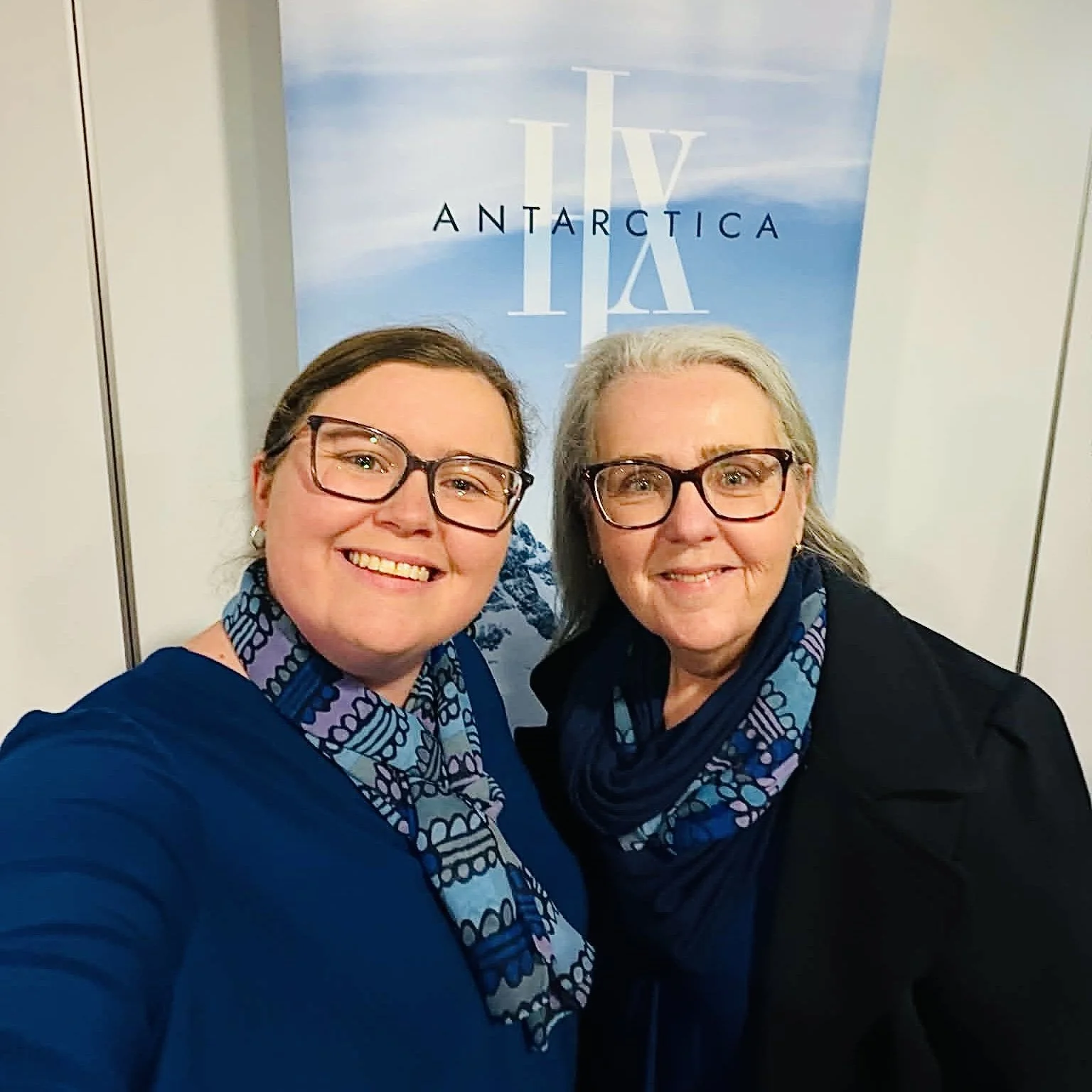
Hayley Bender & Narelle Melhuish
About the Author
Narelle Melhuish has worked in the travel industry for almost 40 years and is Director of Holiday World Travel in Nelson Bay. She specialises in expedition cruising, river cruising and tailor-made journeys, helping travellers choose experiences that genuinely suit their interests and travel style.